Beyond Escrow Payments: What's Possible Within the Vela Infrastructure
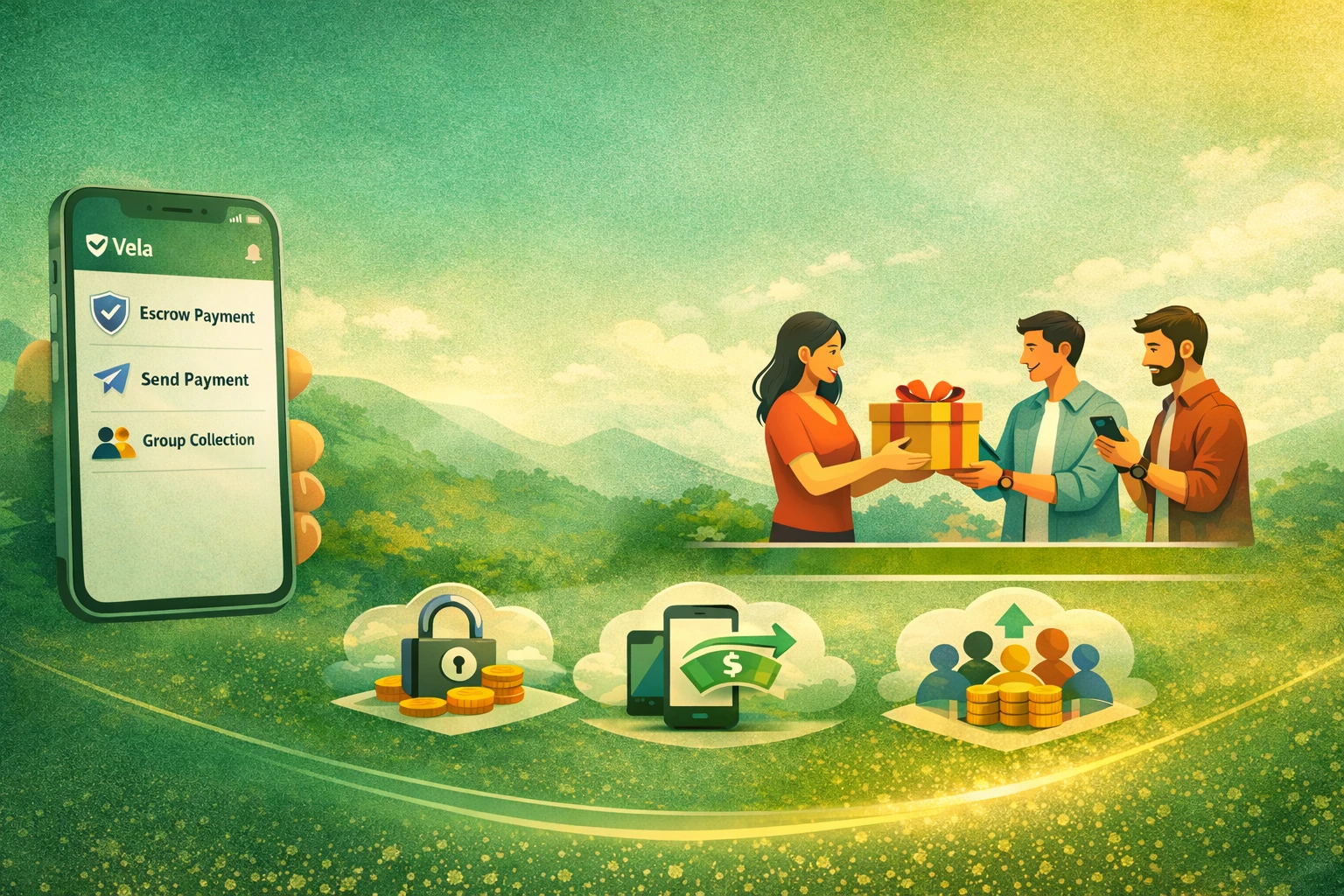
When people first hear about Vela, they often associate it with escrow. That makes sense—escrow is familiar, it signals trust, and it solves a real problem in peer-to-peer transactions. But describing Vela as only an escrow service doesn't capture what it truly is, or what it was built to do.
Vela is a modern payment infrastructure designed to make it effortless to accept money from other people. Escrow is simply one expression of that infrastructure, not its defining limitation.
At its heart, Vela exists to remove friction from everyday payments. The kind of payments that happen in conversations, between individuals, in real time. Selling something online, collecting money from friends, paying for a service, or contributing toward a shared goal shouldn't require complex setup, unfamiliar apps, or awkward back-and-forth. Vela turns these moments into a single, seamless flow.
Escrow plays an important role when trust needs structure. In transactions between people who don't know each other, or where delivery happens later, holding funds securely until conditions are met creates confidence on both sides. Vela supports escrow-style payments exactly for these situations. What makes it different is that escrow is not forced into every transaction. It's there when it adds value, and invisible when it doesn't.
Many payments don't need conditions or releases at all. Sometimes the goal is simply to get paid quickly and cleanly. Vela supports straightforward payments that move directly from payer to recipient, without unnecessary steps or complexity. This makes it just as useful for freelancers, small businesses, and informal sellers as it is for structured marketplace transactions. The experience remains simple, familiar, and fast—regardless of the underlying payment logic.
One of the most powerful extensions of the Vela infrastructure is the ability to handle shared and split payments. In real life, money is often collected from groups, not just individuals. A group gift, a shared expense, or a community contribution usually involves chasing people, tracking transfers, and manually reconciling who has paid. Vela changes that dynamic. Instead of multiple scattered payments, a single collection can be created where each person contributes the same amount, and everything is automatically tracked and pooled into one destination. What used to be admin-heavy becomes effortless.
What ties all of this together is a single, flexible payment foundation. The same infrastructure supports escrow payments, direct payments, pooled collections, and more advanced flows without forcing users into different systems. This flexibility means Vela isn't locked into a single use case or business model. It adapts naturally to how people already exchange money, especially in chat-based and mobile-first environments.
Vela is built for the way people actually pay today—inside conversations, across trust boundaries, and often without formal structure. By going beyond escrow, it becomes something more fundamental: a simple, reliable payment layer for everyday human transactions. Escrow is just one chapter in that story, not the whole book.